Chosen by a House

Wisteria Cottage front

A few years ago, I fell in love with a house. It was just like love at first sight for a human being—the kind of instantaneous, unreasoning wallop that has reduced many a better writer than I to clichés. It caught me off guard; it took my breath away; it floored me.

I’d admired the house from afar for years. It sits well back from the road in a charming if overgrown garden just around the corner from my home. The pale yellow siding, low gabled roof, and riotous garlands of wisteria twining the balcony railing pegged it as a “homey house,” the kind I felt I’d like to know better if I ever got the chance.

My chance came when I saw by the driveway first a “for sale” sign, then a sign announcing an open house. I dragged my husband from his Sunday paper and my son from his play, and we walked around the corner to see the house.

Not the kitchen door

Not the kitchen door

A sign on the front door said in stern letters, “Do Not Open,” and directed all visitors to the kitchen door on the side. I climbed the few steps to the side porch, walked in the kitchen door, and started to cry.

I still don’t know why. The house simply opened its arms to me like a loving grandmother, and I laid my homesick head on her ample bosom and wept.

There was no logic at all behind this reaction. The house did not remind me of any of the places that felt like home to me in my youth—neither my grandmother’s shingled split-level with its wide lawn sloping down to the Chesapeake Bay, nor my great-aunts’ Victorian townhouse full of high ceilings and polished mahogany. Nor did it boast many of the features I’ve always considered mandatory in my dream house: where the fireplace should have been, an ugly gas heater squatted on the sealed brick hearth, and no tower or window seat was to be seen. Not only did the staircase not rise grandly from an open foyer, but the house had no foyer at all and the staircase was on the outside.

Further inspection and questioning revealed that the house—built in the twenties and never remodeled—had major structural problems as well. My husband and I lacked the time, talents, and resources to restore an old house; therefore, my dream home would come ready equipped with a good strong foundation under the weathered pine floors, computer-friendly wiring behind the plaster and beadboard walls, and capacious PVC pipes to feed a steady supply of hot water to the clawfoot tub.

Wisteria Cottage bedroomBut love is blind, and none of these drawbacks made any impression on my affection for the house, which only deepened as I moved from the airy, light-filled living room to the cozy den—just right for a writing room—and on into the warren of tiny rooms at the front of the house, where the precipitous slope of the floor provided a clear explanation for the “Do Not Open” sign on the front door. Upstairs, a blue-and-white bedroom nestled under one gable; I knew my then-twelve-year-old daughter, who could not be dragged from her book to accompany us, would feel just like Anne of Green Gables in that room.

Outside, my son capered across the wooden bridge that arched over the little brook and gazed longingly into the branches of the eminently climbable trees. Dotted about the yard were several tempting spots to linger with a spouse, friend, or good book for companion—one in a rose bower on the east side for coffee in the morning sun, another under the trees by the brook for tea in the afternoon shade.

I walked through the downstairs again, trying to memorize every detail. What was it that called “home” to me so strongly? Surely it had something to do with the deceased owners’ furniture and belongings that still filled the house, untouched. Would the kitchen have been so welcoming if the tall dresser that faced me as I walked in the door had not been filled with brightly colored Fiestaware pitchers and plates? Would the living and dining rooms have seemed so much my own if the ranks of built-in shelves had not been overflowing with gold-stamped hardcover books, if the sideboard had not held hand-tinted photos of the owners’ 1940s wedding in silver filigree frames, if the green nylon plush of the loveseat and chairs had not invited me to sit a spell and chat? I half expected at any moment to see the woman of the house come bustling in from the back porch with a basket of clean laundry, looking just like my Aunt Adee and asking me whether I’d like hot soup or a grilled bacon-and-cheese sandwich for lunch.

We lingered in the garden as other prospective buyers toured the house. I longed for Jedi or wizard-like powers to blind their eyes to the charm of the place, to let them see only the magnitude of the work it needed so they would go away unimpressed, and the ridiculously low offer that was all we could ever afford to make would have no competition. But whatever it was in that house that brought tears to my eyes seemed to affect others almost as strongly. The realtor broke gently the news that good offers had already begun to come in.

I sobbed all the way home—not in despair at knowing I could never own the house, but just because seeing it had shaken me to the core. The despair set in gradually over the next few weeks, as a realtor friend opened my eyes to the reality of the current market and the cost of restoration. The seller was reportedly impervious to any sentimental approach; my love for the house would not impress him. Not even the cleverest, most devious financing tricks would avail to make that house legally mine. At the end of a month it was sold.

I pass the house several times a week, and I always check for signs of progress. My great fear was that the new owners would tear it down and rebuild, or gut the house and remodel it into a typical generic modern box. But so far very little seems to have happened. The external appearance of the house is unchanged. No construction crew has trampled the garden coming in to jack up the foundation or replace the roof. Either the new owners are willing to live with the house’s flaws, or they’ve perfected the art of stealth remodeling.

I’m mystified. And since I’ve never seen people there, only a car, I persist in thinking of it as “my house.” I’ve even named it: Wisteria Cottage—a homey, humble, welcoming name.

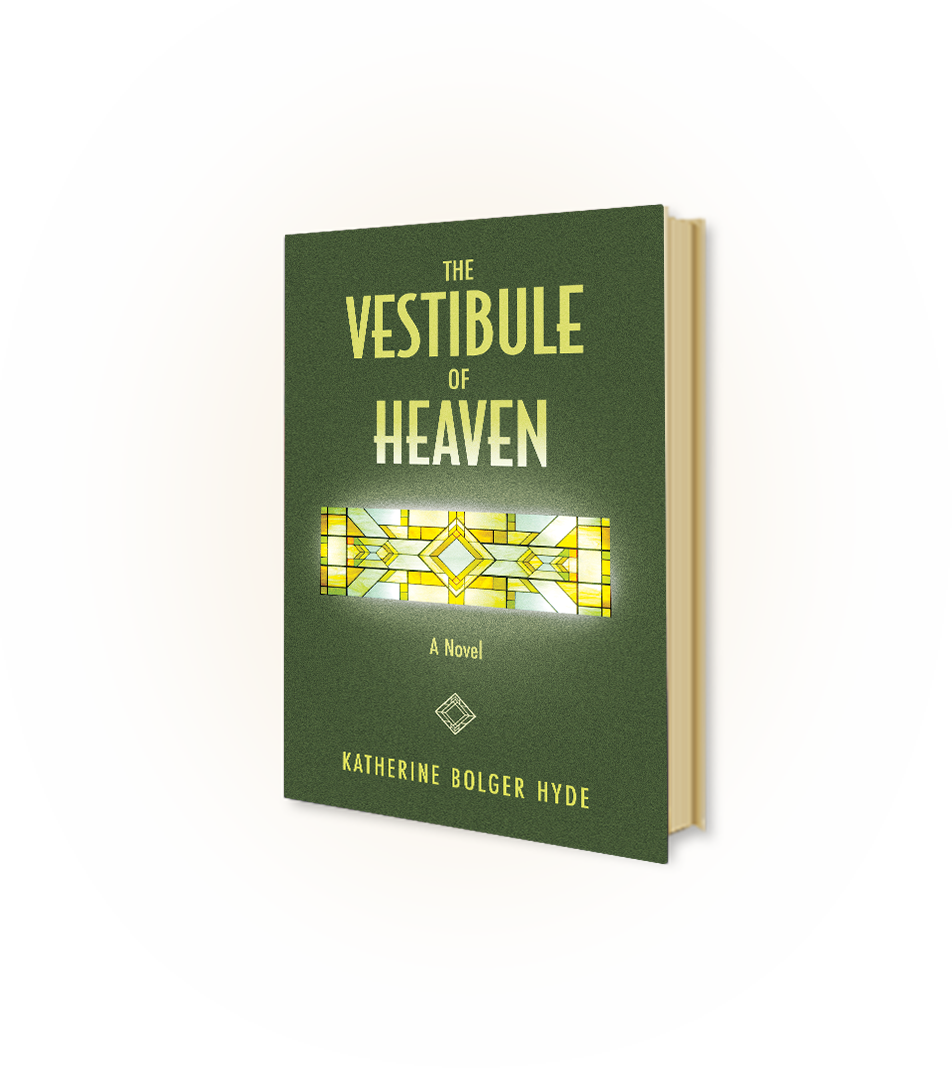
Perhaps someday the new owners will put the house on the market again, either untouched or restored with a fittingly reverent hand. By that time, perhaps the novel I’ve written, The Vestibule of Heaven—in which the house is not so much a setting as a character—will have become a bestseller, and I’ll have another opportunity to respond to “my” house’s imperious call.

But even if that never happens, I know now what I mean when I say the word “home.”

The April Revolution

In a shocking move already being termed “The April Revolution,” a coalition including all major US publishers announced today their decision to publish only low-concept literary novels by debut authors in 2014.

“We feel it’s time these hard-working authors got a share of the market,” said Penny Inkfinger, spokesperson for Megamonstro Press. “So we decided to band together and make it happen.”

The cooperation between publishers was essential, Inkfinger pointed out, because if only one press made the move, its offerings would disappear into the infamous Brain Drain and never be seen on the shelves of prestigious bookstores like Costco and Wal-Mart.

“We’re going for the mass audience here. If the only new books coming out all year are quiet, beautifully written dramas of everyday life, then that’s what people will read. Who knows, they might even develop a taste for it. You know how after you’ve eaten Godiva dark chocolate it’s hard to go back to Hershey’s? That’s what we’re hoping for here. We’re calling it The Year of Reading Dangerously.”

Another innovation for the coming year is the royalty structure. The coalition agreed to suspend all expensive competitive marketing and publicity for their 2012 lists. Instead they will pool their resources to create a low-budget, massive viral marketing campaign for all titles at once. The money saved will go directly to benefit authors.

“Instead of the usual highly unequal distribution of advances, with some titles getting seven figures and some just a handshake and a promise, we’re skipping the advance and paying royalties of 50% of net across the board,” Inkfinger explained. “After all, it isn’t fair that everyone in publishing gets to make a living except the author. Without authors, we’d all be out of a job!”

P.S. April fool, unfortunately.

Why I Write

This is an essay I wrote as an entry for a conference scholarship. I missed the deadline for the scholarship, but this came from my heart and I’d like to share it with you.

Why Writing Is Important to Me

Me at bottom, with my mother and sister

Me at bottom, with my mother and sister

As a child, I was invisible. The shy second daughter of a working single mother whose devotion exceeded her energy, I did my best to leave the smallest possible footprint on the world.

As an adolescent, I was misunderstood—not by my parents, but by my peers. They mistook introversion for arrogance and assumed my preference for intellectual pursuits equaled disdain for the pursuits of others. I wrote for myself alone.

As a young mother in a difficult marriage, I was lost. My voice was drowned by the demands of children and a husband absorbed in his own needs. I tried to write, but with no encouragement, I soon gave up.

As an older mother with a second family, now in a supportive marriage, I realized at last that my spirit was withering for lack of expression. The only way I could find myself was to pour myself out on the page and watch what took shape. Job and children notwithstanding, I carved out space and time and began to write.

Eight years and four novels later, as a middle-aged woman on the cusp of an empty nest, I have served my apprenticeship. I have honed my craft, persisted through rejection, shared my lessons learned with those just setting out on this daunting but exhilarating road.

I have found my voice. I am ready to be heard. I will not be silenced again.

Ballad of IKEA—Swedish-American Pie

(with apologies to Don McLean)

Just last Saturday
I can still remember
how those couches used to make me smile
And I knew if I took one home
That I would never want to roam
And maybe I’d be happy for a while

If you’ve a small car you may shiver
At their prices to deliver
Better make a few trips
You would never want to skip
All the bargains there inside
Cause your car is neither long nor wide
It is so hard to decide
Just which things you will buy.

And you’ll be singing
Bye, bye, Swedish-American Pie,
Drove my Kia to IKEA where the prices aren’t high
Those sweet young things were drinking coffee with pie,
Singing, “This’ll be the day that I buy,
“This’ll be the day that I buy.”

Did you see the furniture,
All the bedding and the comforters,
The curtains and the storage too
For kitchens all that you could wish
From a cabinet to a chafing dish
It’s all waiting safely there for you

Well I know that you’re in love with that
Green towel set with the cute bathmat
You kicked off your shoes
And you dug your toes in too

And if you bring a pickup truck
You can furnish a home for a thousand bucks
You never will be out of luck
If you’re prepared to buy.

And you’ll be singing
Bye, bye, Swedish-American Pie,
Drove my Kia to IKEA where the prices aren’t high
Those sweet young things drinking coffee with pie,
Singing, “This’ll be the day that I buy,
“This’ll be the day that I buy.”


More Next Big Things

Remember last Wednesday’s post about my Next Big Thing? The other writers I linked to have posted about their projects, so please go pay them a visit:

Bev Cooke talks about her fairy tale, The Laughter Thief.

Charise Olson talks about her “California fiction,” Blame It on the Barbecue.

Katherine Grace Bond talks about her recently released YA novel, The Summer of No Regrets.

I hope you enjoy getting to know all the writers in this blog hop. Happy reading!

Encounter with a Guardian Angel

bouguereau23-450x291An amazing story was related to me recently by my friend and coworker, Matthew Dorning. He gave me permission to pass on the story in my own words.

Several years ago, shortly after his conversion to Orthodoxy, Matt was painting in the two-story foyer of his home atop a 24-foot ladder. His young son held the ladder from a nearby stairway, while two friends—one of whom was a big, tall man—worked in the kitchen.

After he’d been working awhile, Matt’s knees locked and he lost consciousness. He fell backwards off the ladder and landed on the floor, 24 feet below.

He opened his eyes to see three concerned faces hovering over him. He said to his tall friend, “Thank you for catching me.”

The friend replied in shock, “I didn’t catch you! We were in the kitchen. We saw you fall but couldn’t get to you fast enough.”

Confused, Matt said, “But while I was falling, I saw a big man reach out long arms, catch me, and lower me to the floor.”

No one else had any idea what he was talking about.

Matt’s wife returned home shortly afterward and insisted on taking him to the emergency room, although he felt fine. The doctors did all sorts of tests on him but could find no damage, other than a few minor cuts and bruises. They sent him home.

Later, Matt related the story to his priest. His priest said, “Those arms belonged to your guardian angel. Your guardian angel saved you.”

So many times we hear of children having narrow escapes from danger and we say, almost offhandedly, “His guardian angel was working overtime.” But guardian angels don’t leave us when we grow up. They never stop looking out for us. Their main job is to help save our souls; but when necessary, they save our bodies as well.

The Next Big Thing

Today I’m participating in a “blog hop”—sort of like a chain letter for blogs, but without the guilt. I was tagged last week by Susan Cushman (thanks, Susan!), and at the end of this post I’ll tag several other authors, who will post on the same topic next week. Basically, this blog hop gives us all a chance to tell the world about what we’re working on without looking like we set up a blog just to tell the world about what we’re working on.

We’re asked to answer a series of questions, so here goes!

1: What is the working title of your book(s)?

The book I’ve recently finished writing is called The Ghostwriter.

5: What is the one-sentence synopsis of your book? (I moved this question to a more logical place in line.)

Reclusive author Maeve O’Shaughnessy hires her identical twin, Margaret, to be her public persona, but when Maeve goes into a coma, Margaret is in danger of losing her own identity as well.  

2: Where did the idea come from for the book?

Like most authors I know, I hate the idea of doing my own publicity and marketing. (I’ve found I don’t hate the reality quite as much as I hate the idea.) I’m an introvert, which makes it especially hard. But my sister is an extrovert. So I was thinking one day, wouldn’t it be great if I could get Anne to do all the marketing for me, because she would actually enjoy it. I played around with that idea and took it to its logical conclusion, and The Ghostwriter was born.

3: What genre does your book come under?

This is always a tough question for me. It’s sort of commercial literary or book club fiction, with a dash of magical realism.

4: Which actors would you choose to play your characters in a movie rendition?

emma-thompson-2I don’t choose actors to represent my characters as I’m writing; I envision them as faces I’ve never seen. So this is a difficult question to answer, because no actors I know of look at all as I imagine my characters looking. But I could see Emma Thompson—with red hair and an American accent—in the dual role of Maeve/Margaret.

1251305899_hugh_grant_290x402The love interest, Edward, is trickier. If you can imagine a cross between Tom Hanks and Hugh Grant—Tom’s wholesomeness with Hugh’s boyish charm—you’d have something like Edward. Unfortunately they’re both a little old for the part (all these characters are in their mid-40s).

6: Is your book self-published, published by an independent publisher, or represented by an agency?

The Ghostwriter is represented by Diana Flegal of Hartline Literary. I just sent her the proposal this month, so no publisher action yet.

7: How long did it take you to write the first draft of your manuscript?

It took about nine months to write the first draft, with three to six months of concept development and research before that. I read a lot of books about twins.

8: What other books would you compare this story to within your genre?

The book that first comes to mind—the book without which I doubt Ghostwriter would have been written—is The Thirteenth Tale by Diane Setterfield. But other than being about twins with concomitant identity issues, the two books have little in common.

I always have a hard time finding comparables for my novels. The people whose style mine resembles tend to write about different topics; hardly anyone writes about similar topics in a similar way, seemingly. Of the writers I know, I think Susan Cushman may be the most similar to me, but we’re both still awaiting publication.

10: What else about your book might pique the reader’s interest?

I deal with the special connection between identical twins—twin language, telepathy, feeling each other’s pain, and so forth. It’s a fascinating set of phenomena with no satisfactory scientific or even spiritual explanation. I don’t attempt any explanation in the novel, but just sort of take the phenomena for granted, as a natural part of these twins’ lives.

That’s it for me. Next week on March 6, please visit the following blogs to read about these authors’ Next Big Things:

Charise Olson writes what she calls California fiction—”It’s like Southern fiction, but without all the humidity.” In other words, contemporary fiction with a humorous voice but with underlying serious spiritual and emotional issues.

Bev. Cooke writes a variety of genres for children and young adults. Her published works include Feral, told from the point of view of a feral cat; Royal Monastic, a biography of Princess Ileana of Romania; and Keeper of the Light, a fictionalized story about St. Macrina the Elder.

Katherine Grace Bond‘s latest book is a YA spiritual journey/romance, The Summer of No Regrets. She also teaches TeenWrite workshops where teens interact with each other as their characters.

A Casual Vacancy on My Bookshelf

In this blog post, I’m going to do two things I don’t normally do.9780316228534_p0_v1_s600

  1. I’m going to review a book I didn’t finish.
  2. I’m going to review a book I didn’t like.

You’ve probably guessed from the title: It’s J. K. Rowling’s The Casual Vacancy. I got about halfway through it, and the only reasons I got that far are (a) my kids gave me the book for my birthday (and I do appreciate it, kids—I really did want to read it!), and (b) I kept hoping, based on my respect for the author I thought I knew, that it would improve.

So far, no.

I’ll get into details in a minute, but the main reason I didn’t like this book is that it made me feel betrayed. I looked forward to a book for adults by the author of Harry Potter, thinking I would find her humor, depth of character, storytelling prowess, and a similar worldview wrapped up in a different genre package.

Instead, I found a volume with no humor except a bit of the very snarkiest, no likable characters, no plot to speak of, and a ferocious cynicism I would never have believed the author of Harry Potter could possess. Plus as much profanity as you’d hear in the average prison yard.

The Casual Vacancy is about what happens in a quiet English village after one of its parish council members dies unexpectedly of an aneurysm. The dead man was at the center of a brewing conflict between people who want to get a certain low-income housing project out of the village’s jurisdiction and people who don’t. His death shifts the balance of power, and the book follows a dozen or so adults and teens as their lives go on in the aftermath of his death.

The ironic thing is that the dead man seems to have been the only genuinely good person in the entire village. The point of view never stays with a single character long enough for the reader to develop a strong sympathy with any of the others, who are in some cases pitiable but never really likable. And so far, in the first half of the book, nothing of any significance has actually happened. No one shows any signs of impending change—at least not for the better.

It got to the point that the unsavory language and behavior of the characters was affecting my thinking when I was away from the book, so I had to put it down. I usually like getting caught up in a book’s world, but this book’s world was not a place I wanted to hang around in, nor did I sense any potential benefit to myself from doing so.

I don’t know what your game is, Jo Rowling. I can understand wanting to write something completely different from the series that consumed your life for so many years; but did you have to write something that no one who liked HP for the right reasons could love? Has the life of a billionaire best-selling author really extinguished every spark of hope for humanity and turned you completely against your fellow man? And has it led you to believe you can dispense with the fundamentals of good writing, such as plot and character development, because your name will automatically sell anything you choose to publish?

If that’s the case, I don’t envy you your success. I’d rather be a struggling pre-published author who still believes in the values of Harry Potter—values like love, friendship, courage, and the ultimate triumph of the good. Until you can show me you still believe in them too, there will remain a casual vacancy for a new good novel by J. K. Rowling on my bookshelf.

P.S. If anyone who managed to slog through the entire book can reassure me that it does make a miraculous turnaround in the second half, I will be pleased and grateful. But I probably still won’t finish it.

The Artist’s Dilemma

I’ve just read (in one evening) The Sister of the Angels by Elizabeth Goudge, a sweet story about a young girl, an artist, and a chapel full of frescoes. I recommend the book for anyone interested in any form of art, as well as anyone looking for a new family Christmas favorite. But I’m not going to review it at length; I’m just going to quote one passage that is worth the whole weight of the book. The young girl’s father, a writer, is telling her a story about the artist.

“In some ways this man was rather unfortunate because no one wanted to buy the pictures that he painted, and as he had to support himself and his family this was rather awkward, because if people don’t give you money for the work that you do you starve, and so does your family, and you don’t like that, nor do they. All artists, whether they are musicians or painters or writers, experience the same difficulty. . . . It’s a difficulty that passes, of course; for one of three things is bound to happen fairly soon: either the artist, under pressure of starvation, gives up painting the pictures he wants to paint, but can’t sell, and paints those that he does not want to paint but can sell; or else he manages to last out until the public, having got accustomed to the kind of art that they formerly reviled, suddenly change their minds and like it after all; or else, remaining true to the kind of work he likes and not having the kind of body that will last out unfed while the public slowly change their minds, he dies.”

“But there’s another thing he could do,” said Henrietta eagerly. “He could give up being an artist and do something quite different; he could be a ticket collector or a pork butcher.”

“No,” said Ferranti somberly, “with an artist that is only another form of death. I’ve tried it, and I know.”

I guess this puts me, and a great many other writers, among the walking dead. We kill ourselves with work we don’t love that puts bread on the table, while trying to keep ourselves marginally alive by doing the work we love in bits and pieces of time left over. This is not a good way to live—or to make art.

Of course, it could give you plenty of first-hand experience to use in writing zombie fiction, if that’s what floats your boat. It doesn’t float mine.

To Write, You Must Read

That proposition will probably seem self-evident to most of my readers. But I recently heard an acquaintance who is the author of a fiction manuscript admit that she is “not a reader.”

I have to say, I was flabbergasted. Dumbfounded. Bewitched, bothered, and bewildered. To the extent that I couldn’t find words to tell her she must read if she ever wants to succeed as a writer.

As a child, I was so eager to read that I taught myself at age four. I don’t say that to brag, but to emphasize how inconceivable it is to me that anyone would not be interested in reading. So it’s difficult for me to isolate specific reasons that reading fiction is necessary to a fiction writer. Nevertheless, I’m going to try.

1. Reading gives you a feeling for language.

At the risk of belaboring the obvious, language is the writer’s medium. Just as a painter has to learn how to use brushes, paints, and canvas, a writer needs to learn how to use words. This knowledge includes everything from the mechanics of grammar, spelling, punctuation, and usage to the fine shades of meaning and sound.

I’m convinced that my instinctive feeling for proper and improper English is primarily attributable to years of reading writers who were as skilled in wielding words as Leonardo was in wielding a paintbrush. You can learn rules in a classroom, but you can only internalize the depth, breadth, and infinite possibilities of language through reading the work of writers who have used it well.

2. Reading teaches you how to tell a story.

How would you even know what a story is if you don’t read them? Of course, we all hear stories, or watch them in movies. Certain factors are common to stories in any form, but others are specific to written stories. How do you begin a story in words? How do you develop character? How do you portray a character’s inner life? How do you integrate setting into your story? How do you convey your theme? Movies can’t teach you any of these things, because they use different techniques to accomplish them.

This is just the tip of a whole iceberg of what a writer can learn on a technical level through reading.

3. Reading acquaints you with what has already been done.

If you want to write something fresh, you need to know what has already been written. In every genre, certain stories, character types, patterns, and tropes have been done to death. These may well be the first stories, characters, etc. that pop into your mind when you decide to write a book. You can save yourself a lot of trouble if you know up front what to avoid.

On the flip side, wide reading will give you a cultural context that you can employ to enrich your writing. Allusions to your favorite writers—subtle or obvious, conscious or unconscious—will add depth and resonance to your story as they cause your reader to reflect on the connections implied.

4. Reading acquaints you with the conventions of your genre.

This is the argument I most often hear advanced for writers to read, but to my mind it’s the least important. Nevertheless, if you are going to write within an established genre, it is essential to know what readers (and correspondingly, agents and publishers) of that genre expect from a story.

Some genres have more specific requirements than others. My understanding (second-hand, as I neither read nor write in this genre) is that category romance is one of the most restrictive, with rules about word count, character professions and personalities, and in which chapter the hero and heroine must meet, kiss, fight, have sex, etc. Literary fiction is possibly the least restrictive in terms of specific elements, although arguably the most difficult to write well.

5. Reading gives you membership in the most fascinating community of people in the world.

When I open a novel, I’m entering a new world. Not just the world the author has created within the story—though that’s a thrilling experience in itself—but the world of the author him/herself and of all the people who have read the story, are reading it now, or will read it in the future. It’s also the world of everyone who had some kind of impact on the author’s life that contributed to the story being what it is. And it’s the world of all the writers the story’s author read and loved, and the people who read their stories. When I open a novel, I’m only six degrees of separation from the greatest minds ever to live on this planet.

I imagine every reader has had the experience of making a new friend through a book. Maybe the person next to you on the plane asked what you were reading, and that author turned out to be one of your seatmate’s favorites too. Maybe you met someone on Goodreads, or at a bookstore or a library.  Maybe a teacher recommended a book to you, and through that recommendation you discovered your teacher was a kindred spirit after all.

If you try to write without being a reader, you’ll miss out on this community, and the loss will hurt your writing. It will also substantially impair your chances of getting published. Personal connections are just as important in publishing as in any other field. If publishing professionals you meet sense that you’re not a kindred spirit—because you’re not a reader—you likely won’t get far.

6. Reading shows you what can be achieved.

Those striving in any field of endeavor need to be inspired by the greats who have come before them. You need a sense of what is possible so you know what to strive for. In fact, I would go so far as to say that, unless you’re a born genius like Shakespeare or Dickens:

You will never write better than the best authors you read.

Why Fiction?

This list is far from comprehensive, and it doesn’t even touch on the most basic point of all: Why would anyone who doesn’t love reading fiction even want to write it? If it’s because you have a message to convey, a point to make, there are many better ways of doing that than through fiction. Fiction is (ideally) art, and art does not exist for the purpose of conveying a message or making a point. Art doesn’t so much answer questions as ask them. If you think you have answers, hire a co-writer or ghostwriter and write a nonfiction book, or a blog, or go on the radio and speak your mind.

But please, don’t waste your time writing fiction.

P.S. My apologies for the blog silence the last couple of weeks. Health issues have been limiting my working hours, and I can’t prioritize the blog over my fiction or my day job.